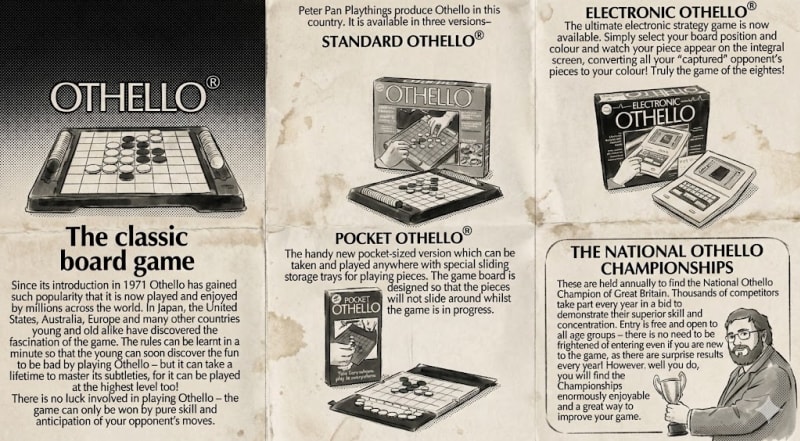
Othello has captivated players for over a century, evolving from a simple parlor game into a globally recognized competitive sport. Discover the fascinating history of Othello, understand its rules, and learn why it remains one of the world's most popular strategy games.
The Origins: From Reversi to Othello
The game we know as Othello has its roots in Reversi, invented in England in 1883 by either Lewis Waterman or John W. Mollett (the exact origin is disputed). The original Reversi was played on a cross-shaped board and had slightly different rules.
In 1971, Japanese game designer Goro Hasegawa adapted Reversi, standardized the rules, and renamed it "Othello" after Shakespeare's play—a reference to the dramatic reversals that occur during gameplay, much like Othello's changing fortunes in the play.
The Modern Othello Revolution
Hasegawa's version standardized several key elements:
- The 8x8 board format we use today
- The fixed starting position (four discs in the center)
- Black always moves first
- Clear rules about legal moves and flipping
This standardization helped Othello spread rapidly, first in Japan and then worldwide. The game's simplicity and depth made it accessible to casual players while offering enough complexity for serious competitors.
Competitive Othello
Othello became a competitive sport in the 1970s. The first World Othello Championship was held in 1977 in Tokyo, and it has been held annually ever since (with a few exceptions). The championship has been dominated by Japanese players, though players from other countries have also achieved success.
Today, Othello has a thriving competitive scene with:
- National championships in dozens of countries
- International tournaments and rankings
- Online competitions and leagues
- Computer Othello programs that have reached superhuman levels
Why Othello Remains Popular
Several factors contribute to Othello's enduring appeal:
- Perfect Balance: Simple enough for beginners, deep enough for masters
- Quick Games: Most games finish in 15-30 minutes
- Visual Appeal: The board state is clear and easy to understand
- Dramatic Reversals: Games can turn around completely in a single move
- No Luck: Pure strategy means the better player always wins
- Accessibility: Easy to learn, portable, and playable online
These qualities make Othello appealing to players of all ages and skill levels.
Othello in the Digital Age
The internet revolutionized Othello, making it easier than ever to play:
- Online platforms allow players to find opponents instantly
- Computer programs help players analyze positions and improve
- Video tutorials and strategy guides are widely available
- Online communities connect players from around the world
- Mobile apps bring Othello to smartphones and tablets
These developments have helped Othello reach new audiences and maintain its popularity in the digital era.
Othello's Cultural Impact
Othello has influenced popular culture in various ways:
- Featured in movies, TV shows, and literature
- Used in educational settings to teach strategic thinking
- Inspired computer science research in game theory and AI
- Created a global community of passionate players
The game's combination of simplicity and depth makes it an ideal tool for teaching problem-solving and strategic thinking.
The Future of Othello
Othello continues to evolve and grow:
- New generations discover the game through online platforms
- AI research pushes the boundaries of perfect play
- Tournaments attract players from around the world
- Educational programs introduce Othello to schools
With its perfect balance of accessibility and depth, Othello is well-positioned to remain popular for generations to come.
Key Takeaway
Othello's journey from a 19th-century parlor game to a modern competitive sport demonstrates its timeless appeal. Its perfect balance of simplicity and depth, combined with dramatic reversals and pure strategy, ensures it will continue captivating players for years to come. Whether you're a casual player or aspiring champion, Othello offers endless opportunities for growth and enjoyment.

